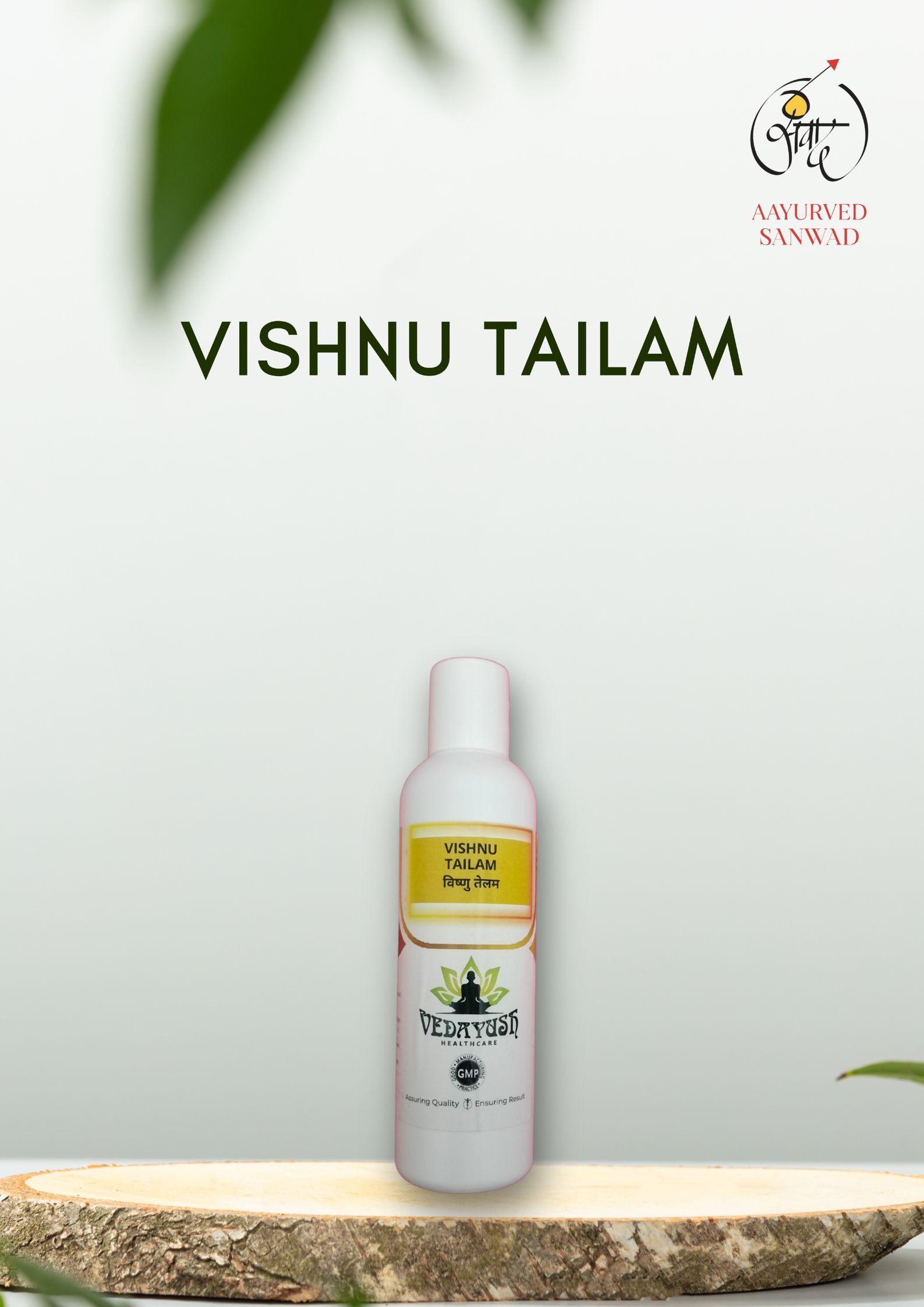
Description
Vishnu Tailam appear in regional manuscripts of Marma Chikitsa dating back to the 17th century, though oral traditions hint at even older roots. In the Shankha Prakasha by Acharya Vishvambhara, a section describes “Trikadi Anu Taila” used for marmapoint therapy – many scholars propose this is a precursor to today’s Vishnu Taila. By the 19th century, texts in Kerala’s Ashtanga Hridaya commentary emphasized its use for Vata disorders after Shodhana (purification) treatments.
Traditionally, Vishnu Tailam was not used for ingestion but strictly for external application, especially in Abhyanga (massage) rituals aimed at relieving Vata imbalances. Over time, its reputation grew from a household remedy to clinic-grade preparation for osteoarthritis, sciatica, and fibromyalgia. Even in contemporary Panchakarma centers, Vishnu Tailam is chosen post-Basti therapy to soothe residual discomfort.
Active Compounds and Mechanisms of Action
Vishnu Tailam’s potency arises from its herbal constituents, each carrying specific rasa, virya, vipaka, and prabhava:
- Sesamum indicum (Til Tailam): Snigdha (unctuous), ushna virya (warming potency), katu vipaka, supports srotas lubrication.
- Butea monosperma (Palash Pushpa): Madhura-kashaya rasa (sweet-astringent), ushnavirya, katu vipaka, prabhava enhances skin penetration.
- Solanum indicum (Kantakari): Tikta rasa (bitter taste), ushna virya helps reduce inflammation in joint spaces.
- Solanum xanthocarpum (Yellow-berried nightshade): Ushna virya, kapha-pitta-shamak (balances Kapha and Pitta), clearing blockage in channels.
- Cocos nucifera (Coconut Oil): Sheeta virya (cooling), sweet vipaka, nourishes dhatus, prevents excessive heat during massage
The unctuous sesame oil base acts as a carrier, facilitating the herbal actives’ permeation through skin and superficial fascia. Palash Pushpa contributes tannins and flavonoids, which provide mild astringent and antioxidant action – this synergy with coconut’s fatty acids helps maintain tissue integrity. Kantakari and Solanum compounds inhibit pro-inflammatory cytokines, offering a gentle analgesic effect noted in marma therapies.
Therapeutic Effects and Health Benefits
Vishnu Tailam is widely recognized for a spectrum of benefits, mainly grounded in Vata-pacifying and srotoshodhana (channel-clearing) actions.
- Relieves Joint Pain: A 2018 pilot study in International Journal of Ayurveda reported a 35% reduction in stiffness among knee osteoarthritis patients using Vishnu Taila massage daily for 4 weeks.
- Muscle Relaxation: Real-life case: a 45-year-old vine farmer in Kerala applied the tailanightly post-harvest; he noted diminished calf cramps within 10 days.
- Marma Therapy: Practitioners use the taila to stimulate energy points, improving circulation. Anecdotally, patients with chronic back pain describe “deep warmth” reaching spinal nerves, easing sciatica symptoms.
- Skin Toning: The astringent quality from Palash reduces minor abrasions and supports mild wound-healing. Traditional midwives apply it postpartum to tone abdominal muscles and reduce stretch marks.
- Vata Disorders: By balancing erratic Vata dosha, it assists in headache relief, insomnia, and neuralgias. A small observational trial in Pune found improved sleep patterns in 70% of volunteers after temple oil massages with Vishnu Taila.
- Anti-Inflammatory: The nattural alkaloids in Kantakari block inflammatory pathways; some arthritic patients report decreased NSAID dependency when combined with Vishnu Taila massages twice weekly.
Vishnu Taila stands out as a time-honored Ayurvedic oil tailored for Vata disorders, joint pain, muscle tension, and marma therapy. Its distinct blend of sesame, Palash, Kantakari, and coconut confers warming, unctuous, and channel-clearing effects supported by both classical commentary and budding modern studies. While often lauded for its anti-inflammatory and analgesic benefits, mindful sourcing, proper application methods, and safety precautions are essential for optimal outcomes.
Reviews
There are no reviews yet.