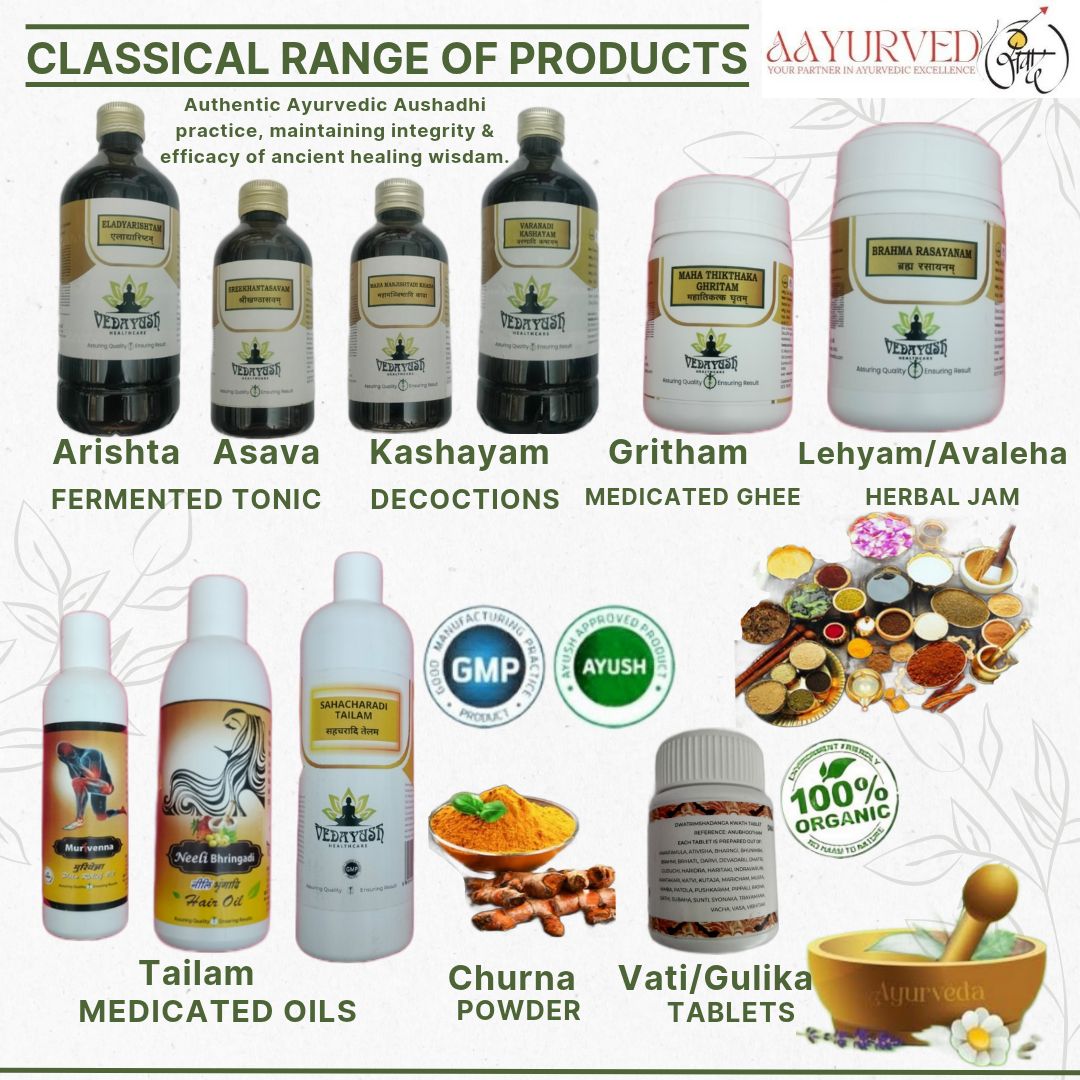
Ayurvedic classical products are formulations described in traditional Ayurvedic texts such as Charaka Samhita, Sushruta Samhita, and Ashtanga Hridaya. These products adhere strictly to Ayurvedic principles and use natural herbal ingredients in specific formulations for holistic health benefits. They are core to Ayurvedic therapy (Aushadhi) and align with Ayurveda’s therapeutic pillars.
Classical Product Categories and Definitions
1. Kashaya (Decoctions)
- Definition: Liquid preparations obtained by extracting the active principles of herbs through boiling in water.
- Preparation: Raw herbs (single or multiple) are boiled in water until the liquid quantity reduces to a prescribed amount. The filtrate is then cooled and stored.
- Role in Ayurveda: Kashayas have quick absorption and are primarily used for detoxification, digestion, and respiratory ailments. They address imbalances by pacifying aggravated doshas.
2. Churna (Powders)
- Definition: Finely powdered herbal mixtures combining single or multiple plant parts.
- Preparation: Dried raw herbs are ground into fine powder using traditional or mechanical methods.
- Role in Ayurveda: Easy to dose, churnas aid digestion, metabolism, and chronic diseases by providing concentrated herbal benefits in dry form suitable for long shelf life.
3. Avaleha (Herbal Jaggery Syrup/Lehyam)
- Definition: Semi-solid preparations made by cooking herbal extracts with jaggery/sugar and ghee.
- Preparation: Decoctions or extracts are cooked with sugar or jaggery to form a viscous, paste-like consistency; sometimes ghee or honey is added for texture and efficacy.
- Role in Ayurveda: Avalehas are nourishing and rejuvenating, effective in respiratory and neurological disorders due to their sticky and warming nature which enhances bioavailability.
4. Tailam (Medicated Oils)
- Definition: Oils prepared by processing herbs in a base of sesame or coconut oil, sometimes with ghee.
- Preparation: Herbal decoctions are boiled with raw oils and other adjuncts through a traditional method until the preparation reaches specific consistency and potency.
- Role in Ayurveda: Used externally for massage, joint pain, skin disorders, and internally for providing lubrication and improving absorption of herbs.
5. Gritham (Medicated Ghee)
- Definition: Clarified butter infused with herbal extracts.
- Preparation: Butter is clarified to remove milk solids, then boiled with decoctions/herbs till properly infused.
- Role in Ayurveda: Ghee serves as a carrier for herbs to reach deeper tissues, promotes digestion, rejuvenation, and mental health.
6. Bhasma (Calcinated Metals/Minerals)
- Definition: Ashes obtained from purified and incinerated minerals or metals processed per Ayurvedic protocols.
- Preparation: Metals/minerals are subjected to steps of purification (Shodhana) and incineration (Marana) to prepare fine, bio-absorbable powders.
- Role in Ayurveda: Used in specific dosha imbalances and chronic degenerative disorders; supports body strength and immunity when used cautiously.
7. Asava and Arishta (Fermented Herbal Wines)
- Definition: Ayurvedic fermented liquid preparations containing herbal extracts.
- Preparation: Extracts are fermented with natural sugars and herbal juices over time to develop alcohol content that helps preserve and boost efficacy.
- Role in Ayurveda: These are digestive stimulants and health tonics promoting metabolism and detox.
8. Swarasa (Expressed Juice)
- Definition: Fresh juice extracted from freshly plucked herbs.
- Preparation: Herbs are crushed and filtered to obtain pure juice for immediate consumption.
- Role in Ayurveda: Used for acute conditions offering potent and fast action due to fresh active compounds.
The Role of These Products in Ayurvedic Aushadhi Pillars
Ayurveda’s therapeutic pillars (Aushadhi) emphasize natural remedies for balancing the tridoshas (Vata, Pitta, Kapha) and restoring health through harmonized physical, mental, and spiritual healing. These classical products fulfill this by:
- Providing easily absorbable, dosha-specific treatments with natural whole-herb synergy.
- Supporting detoxification and metabolic balance fundamental to Ayurveda’s preventive and curative philosophy.
- Offering diverse dosage forms for personalized treatments ranging from topical applications to internal use.
- Upholding traditional preparation methods which preserve the potency and safety of herbal medicines.
- Serving as essential components in Panchakarma and Rasayana therapies for rejuvenation and longevity.
Summary Table: Classical Ayurvedic Products
|
Type |
Description / Example |
Main Use |
Key Purpose |
|
Kashaya |
Decoction (Kwath) |
Infections, fever, digestion |
Detoxification, rapid effect |
|
Churna |
Powder (Triphala, Sitopaladi) |
Digestion, metabolism, chronic diseases |
Easy mixing, palatable, versatile |
|
Avaleha |
Herbal Jam (Chyawanprash) |
Immunity, strength, respiratory wellness |
Nourishing, palatable, Rasayana |
|
Tailam |
Medicated Oil (Mahanarayan) |
Pain relief, massage, neurological issues |
Lubrication, external/internal Snehana |
|
Gritham |
Medicated Ghee (Brahmi) |
Brain, eyes, digestion |
Deep tissue delivery, balances Vata/Pitta |
|
Bhasma |
Ash (Abhrak, Swarna) |
Anemia, chronic illness |
Potent, micro-mineral therapy, Rasayana |
|
Asava/Arishta |
Fermented Tonic |
Appetite, digestion, immunity, females |
Tonic, stimulating, long shelf life |
|
Vati/Gutika |
Tablets, pills |
Convenience for all ailments |
Portable, standardized, slow release |
This classical range forms the foundation of authentic Ayurvedic Aushadhi practice, maintaining the integrity and efficacy of ancient healing wisdom in modern healthcare.
Asava and Arishta are two important Ayurvedic liquid formulations, both prepared via natural fermentation, but they vary distinctly in their base ingredients, preparation methods, uses, and purpose in therapy.
Definition
- Asava: An Ayurvedic fermented tonic prepared by soaking fresh herbal juices or extracts (without boiling) with sugar or jaggery and water, then fermenting the mixture naturally.
- Arishta: A similar fermented tonic, but made by boiling dried herbs in water (decoction) and then fermenting this decoction with sugar or jaggery and water.
Preparation Methodology
Asava Preparation
- Fresh herbs are crushed to extract juice, or used as a cold infusion in water (no heating/boiling).
- The herbal juice/extract is mixed with sugar/jaggery (and sometimes honey) and water.
- Dhataki (Woodfordia fruticosa) flowers are added to initiate and maintain the fermentation process.
- The mixture is placed in an earthen or glass vessel, sealed, and left for natural fermentation for 1–2 months.
- The resulting liquid is strained and stored for medicinal use.
Arishta Preparation
- Selected herbs are boiled in water to extract their essence, creating a decoction (kwatha).
- The decoction is filtered and cooled to room temperature.
- Sugar/jaggery and Dhataki flowers are added to the cooled decoction to enable fermentation.
- The mixture is kept in an airtight vessel and allowed to ferment for weeks/months.
- Resulting medicinal wine (arishta) is filtered and used therapeutically.
Classical Role in Ayurvedic Aushadhi Pillar
- Asava and Arishta are foundational in the prakriti (nature) of Ayurvedic medicines, acting as carriers for herbal actives, improving absorption and tissue penetration.
- Their liquid and hydroalcoholic forms allow for dosha-specific, individualized treatment regimens.
- Their preparation aligns with ancient practices ensuring natural extraction, stability, and therapeutic efficacy.
- They are used as primary medicines and as adjuvants in Panchakarma (detox), Rasayana (rejuvenation), and various chronic treatment protocols.
|
|
Key Features |
Both asava and arishta exemplify Ayurveda’s wisdom in creating palatable, stable, and potent medicines from natural ingredients while retaining long shelf-life and minimal side effects when used correctly.
Use & Purpose in Ayurveda
- Asava is generally lighter and milder, favoured for digestive and metabolic disorders, mild chronic ailments, and cases needing fast absorption without heavy potency.
- Example uses: Improving appetite, treating mild fever, boosting digestion, enhancing metabolism.
- Arishta is heavier and more potent, preferred for chronic or severe conditions—such as respiratory issues, musculoskeletal disorders, immune or liver problems—thanks to deeper extraction through boiling.
- Example uses: Immunity boosting, treating joint pain, liver disorders, chronic fever, respiratory inflammation.
Both forms contain natural selfgenerated alcohol (5–12%), which acts as a preservative and extraction medium for active plant constituents, ensures quick absorption, and gives a long shelflife (often years).
Here is a detailed summary of the uses and purposes of all major types of classical Ayurvedic products, reflecting their foundational roles across preventive, curative, and restorative Ayurvedic therapies:
1. Asava/Arishta (Fermented Tonic)
- Uses: Digestive complaints (Dashamoolarishta), blood/liver cleansing, immunity, gynecological, and metabolic disorders.
- Purpose: Long shelf life, enhances absorption, supports appetite and general strength; acts as a tonic.
2. Kashaya (Decoction)
- Uses: Acute and chronic conditions like fever, infections, digestive issues, skin diseases, and respiratory illnesses.
- Purpose: Detoxification, balancing aggravated doshas, providing rapid action through high bioavailability of water-extracted herbal actives.
3. Churna (Powder)
- Uses: Digestive enhancement (Triphala), respiratory support (Sitopaladi), metabolic regulation, and chronic ailments.
- Purpose: Flexible, easy-to-consume, dry dosage form that allows for mixing in food, honey, or water; practical for both single and compound formulations.
4. Avaleha/Leha (Herbal Jam)
- Uses: Respiratory conditions (Chyawanprash for cough/cold), boosting immunity, strength, and as a Rasayana (rejuvenative).
- Purpose: Nourishing, easy for pediatric and geriatric use; improves taste and palatability of potent herbs.
5. Tailam (Medicated Oil)
- Uses: Pain relief (joint/muscular), neurological disorders (Shirodhara/Abhyanga), wound healing, skin diseases, and hair care.
- Purpose: Transdermal delivery, lubrication, and nourishment; supports external and internal treatments (Snehana).
6. Gritham (Medicated Ghee)
- Uses: Mental health (Brahmi Ghrita), eye/nasal health, post-panchakarma recovery, digestive support.
- Purpose: Deep tissue penetration, balances Pitta and Vata doshas, carrier medium for fat-soluble actives.
7. Bhasma (Calcinated Ash)
- Uses: Chronic diseases (asthma, anemia, diabetes), rejuvenation, and mineral supplementation.
- Purpose: Micro-dosed mineral/metal therapy with high potency and bioavailability, traditionally processed for safety.
8. Vati/Gutika (Tablets/Pills)
- Uses: Convenient for conditions needing consistent dosing, e.g., fever (Sudarshan Ghanvati), digestive, and respiratory complaints.
- Purpose: Portability, improved compliance, slower release for sustained benefit.
9. Rasa-Rasayana (Herbo-mineral Tonics)
- Uses: Chronic or complex illnesses (cardiac, neurological, sexual health), Rasayana for rejuvenation.
- Purpose: Potent, broad-spectrum action, quick results even in lower doses.
10. Lepa (Herbal Paste)
- Uses: External application for inflammation, pain, skin ailments, and wound healing.
- Purpose: Localized action, anti-inflammatory/cooling or heating effects at affected sites.
11. Swarasa (Fresh Juice)
- Uses: Acute conditions requiring fast intervention, e.g., fever, indigestion, cough (Tulsi, Ginger swarasa).
- Purpose: Highly concentrated, immediate effect.
12. Kwath (Herbal Tea/Infusion)
- Uses: Cleansing, daily wellness, mild ailments, detoxification.
- Purpose: Gentle action suitable for regular consumption.
Table: Classical Ayurvedic Products – Their Uses & Purposes
|
Type |
Description / Example |
Main Use |
Key Purpose |
|
Kashaya |
Decoction (Kwath) |
Infections, fever, digestion |
Detoxification, rapid effect |
|
Churna |
Powder (Triphala, Sitopaladi) |
Digestion, metabolism, chronic diseases |
Easy mixing, palatable, versatile |
|
Avaleha |
Herbal Jam (Chyawanprash) |
Immunity, strength, respiratory wellness |
Nourishing, palatable, Rasayana |
|
Taila |
Medicated Oil (Mahanarayan) |
Pain relief, massage, neurological issues |
Lubrication, external/internal Snehana |
|
Ghrita |
Medicated Ghee (Brahmi) |
Brain, eyes, digestion |
Deep tissue delivery, balances Vata/Pitta |
|
Bhasma |
Ash (Abhrak, Swarna) |
Anemia, chronic illness |
Potent, micro-mineral therapy, Rasayana |
|
Asava/Arishta |
Fermented Tonic |
Appetite, digestion, immunity, females |
Tonic, stimulating, long shelf life |
|
Vati/Gutika |
Tablets, pills |
Convenience for all ailments |
Portable, standardized, slow release |
|
Rasa-Rasayana |
Herbo-mineral tonic |
Rejuvenation, chronic/complex illness |
Potent, rapid, multi-dosha action |
|
Lepa |
Herbal paste application |
Wounds, skin, pain/inflammation |
Local effect, anti-inflammatory, cooling |
|
Swarasa |
Plant juice |
Acute, immediate needs |
Fast, highly concentrated, emergency |
|
Kwath |
Infusion/Tea |
Wellness routines, mild symptoms |
Gentle, daily use, easy absorption |
These forms are central to Ayurveda’s evidence-backed, multi-dimensional approach—offering prevention, effective management, and long-term health improvements for a broad spectrum of health needs. Their continued use sustains Ayurveda’s legacy in providing practical, natural, and holistic healing solutions.